


Dental health is not determined solely by daily oral hygiene and regular dental check-ups. One factor that is often underestimated is diet, which has a direct and lasting influence on the integrity of the hard tissues of the teeth and the oral ecosystem. As dental professionals, you know that food does not merely have a local impact on healthy teeth, but also has systemic effects that shape your patients’ long-term dental health. This article highlights the scientific foundations and practical insights into the role of diet in dental prevention.
Why diet is essential for dental health
The oral cavity is a highly dynamic ecosystem in which pH levels, saliva composition and microbial flora are constantly changing. Every meal and every drink can influence this balance. The process of demineralisation and remineralisation of tooth enamel is closely linked to diet – a mechanism already described by Stephan in his classic pH curve studies.
When we consume carbohydrates, oral microorganisms metabolise these substrates and produce acids as metabolic by-products. These acids lower the pH of dental plaque below the critical threshold of 5.5, at which point the demineralisation of hard dental tissues predominates. Conversely, a conscious choice of foods for healthy teeth can slow down or even reverse this process. Dental care and vitamins play a synergistic role in this – whilst topical fluoridation and mechanical cleaning provide local protective measures, a proper diet provides the systemic conditions necessary for healthy tooth structures.
Furthermore, foods that promote healthy teeth also influence saliva secretion and composition. Increased saliva flow and an optimal buffering system can prevent tooth decay and accelerate the remineralisation of early lesions. This underlines just how fundamental nutrition is to overall prevention.
Foods that protect and strengthen teeth
Calcium and phosphorus are the minerals that build up the enamel and dentine structure. Dairy products such as cheese, yoghurt and milk are classic sources of these nutrients. Cheese, in particular, has a paradoxical effect: although some types of cheese have a low pH, their calcium concentration and mechanical cleaning action increase the rate of remineralisation and may even have a protective effect against tooth decay.
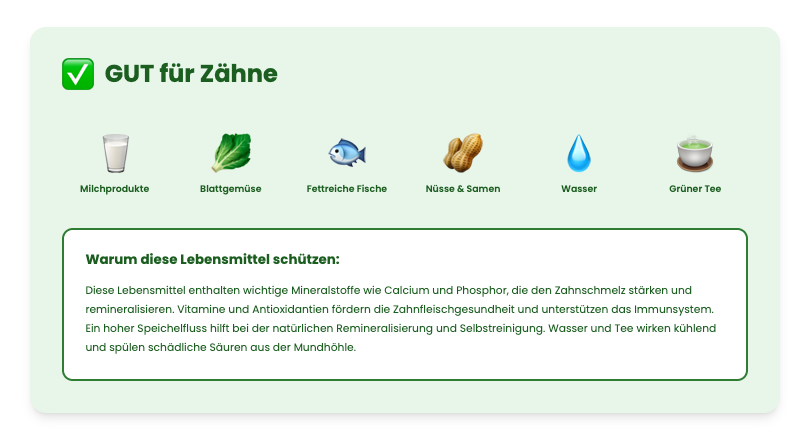
Green leafy vegetables such as spinach and broccoli contain calcium, magnesium and vitamin K – nutrients that contribute to bone health and thus also support the integrity of the alveolar bone. Oily fish such as salmon and mackerel provide vitamin D, an essential micronutrient for calcium absorption and the regulation of mineral balance in the body. Clinical studies have shown that a vitamin D deficiency correlates with increased prevalence of tooth decay.
Nuts and seeds, particularly almonds and sesame seeds, are excellent sources of calcium and magnesium. Their low glycaemic index and mechanical properties make them ideal snacks for patients wishing to minimise their risk of tooth decay. They also promote saliva secretion due to their texture and composition. Apples and other high-fibre fruits also stimulate salivation and have a natural self-cleansing effect due to their structure and acidity – though there is an important nuance here, which we will address later.
An often-overlooked aspect is the role of polyphenols and antioxidants. Green and black tea contain catechins and theaflavins, which have antimicrobial properties against caries-causing strains of Streptococcus mutans. Several clinical studies suggest that regular tea consumption reduces plaque formation and gingivitis. This makes dietary protection of teeth a multifactorial approach that goes beyond mere mineral intake.
Water is the universal drink for a diet that strengthens tooth enamel – it stimulates saliva flow, dilutes acidic drinks and, in many regions, contains fluoride, which further reduces demineralisation. A recommendation for adequate water intake should be incorporated into every dental health consultation.
Foods and drinks that affect dental health
The mechanisms by which diet causes tooth damage are varied. The most obvious category comprises sugary and acidic products. Simple carbohydrates such as sugar, glucose and fructose are fermented by oral Streptococcus mutans strains, leading to a rapid drop in pH. It is not the total amount of sugar that is decisive, but rather the frequency of exposure and the duration it remains in the mouth.
Soft drinks and other sugary drinks pose a twofold risk: they provide readily available carbohydrates whilst simultaneously lowering the pH due to their intrinsic acidity. A pH below 3.0 is sufficient to cause direct erosion of the tooth enamel, regardless of microbial activity. Lemon juice, orange juice and even supposedly healthy fruit drinks have similar erosive potential. Here is an important prevention tip: patients should not sip these drinks over long periods, but should drink them quickly and then rinse their mouths with water.
Sports drinks and energy drinks are modern-day problems that you will frequently encounter in your practice. They combine high concentrations of sugar with acid and are often consumed during or immediately after intense physical activity – precisely when saliva flow is reduced. This significantly increases their cariogenic and erosive potential.
Although low-fibre, highly processed foods do not directly cause caries, they offer no nutritional benefit and can lead to poorer dietary habits. Sticky sweets and snacks with a high sugar content remain on the tooth surfaces for a long time and promote plaque formation, particularly in interproximal areas and fissural structures.
Alcoholic drinks deserve special attention, as many have a low pH and reduce saliva flow. Wine, for example, contains acids (tartaric acid, malic acid) that contribute to erosion, whilst at the same time the alcohol content suppresses the salivary glands. In the long term, this creates an unfavourable environment for dental health.
Dietary advice for optimal dental health
Based on current evidence, you can provide your patients with evidence-based recommendations. Firstly, it is essential to reduce the frequency of sugary snacks and drinks. Ideally, sugary foods should be limited to main meals, when saliva flow is at its peak and the pH buffers are most effective. A clear recommendation is: no more than four to five meals a day containing carbohydrates.
As part of a caries-prevention diet, patients should be advised to drink water after eating and, where possible, to wait 30 minutes before brushing their teeth – particularly after consuming acidic foods, as brushing too soon can otherwise lead to enamel abrasion. A sugar-free drink or sugar-free chewing gum can also help to stimulate saliva flow and promote natural remineralisation.
Integrating oral care and vitamins into dietary advice is crucial. Vitamin C is essential for collagen synthesis in the periodontium – a deficiency leads to increased susceptibility to periodontitis. Vitamin B supports wound healing and the immune system of the oral mucosa. Vitamin E and other antioxidants protect against oxidative stress. A balanced, vitamin-rich diet comprising fresh fruit, vegetables, high-quality protein and healthy fats forms the basis.
Fluoride should be provided systemically via fluoridated water or salt, and topically via dental treatments – though only once the diet has been optimised, as fluoride can only play a supporting role if the basics are not in place.
Common misconceptions about a tooth-friendly diet
A widespread myth is that all fruit can be recommended without restriction. Whilst the vitamins and fibre in fruit are valuable, their natural fructose and acidity can become problematic if consumed frequently and over prolonged periods. Dried fruit such as raisins and figs are particularly problematic, as the sugar is concentrated and the fruit sticks to the teeth for a long time.
A second misconception concerns the assumption that ‘organic products’ are automatically better for your teeth. Organic fizzy drinks or organic fruit juices have the same erosive and cariogenic effect as conventional varieties – the origin of the ingredients plays no role in dental health.
Some patients believe that diet soft drinks are a better choice because they are sugar-free. In fact, these drinks often have higher acid concentrations and contain artificial sweeteners which, whilst not being metabolised, do not improve the composition of saliva. They are therefore not significantly better than their sugar-containing counterparts.
Finally, it is a persistent misconception that immediate dental care is necessary after every meal. This can actually be counterproductive, particularly after acidic meals, where aggressive brushing leads to erosion. The evidence supports waiting 30 minutes and rinsing with water beforehand as a better strategy.
Conclusion: Integrating nutrition-based prevention
The role of diet in dental health cannot be overestimated. Foods that promote healthy teeth are not just a matter for dietitians, but a central element of dental prevention. Your expertise as a dental professional places you in an ideal position to advise your patients and provide them with specific, evidence-based dietary strategies for preventing tooth decay.
Effective prevention requires the interplay of several factors: proper mechanical oral hygiene, regular dental check-ups, fluoride application and – fundamentally – a diet that promotes dental health. By actively supporting your patients in reflecting on and adjusting their dietary habits, you can not only prevent current dental diseases but also lay the foundations for long-term oral health.
Incorporating nutrition that strengthens tooth enamel, oral care and vitamins into your consultations will significantly improve your patients’ outcomes and position you as a trusted partner in health matters. This is, ultimately, the essence of preventive dentistry: proactive, informed and patient-centred.